Grand Lobby
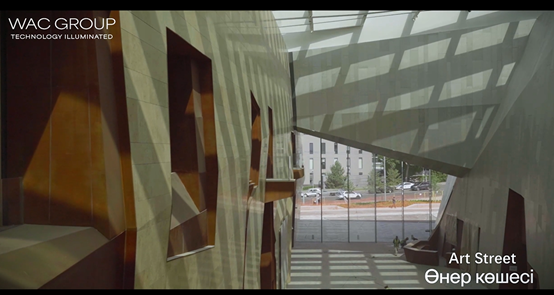
The sunken Grand Lobby reaches approximately 15 meters in height, requiring a lighting strategy that maintains balanced illuminance and visual comfort at high mounting heights. WAC ARCHITECTURAL selected FALCON Large luminaires, engineered with high-efficacy, CRI 97 light sources, that deliver an even wall-washing effect across the 15-meter-high limestone surfaces.
Mounted at high positions, the luminaires provide uniform illumination while controlling long-distance light fall-off and maintaining balanced floor illuminance. Light gently reflects across the stone, revealing depth without glare. Under a DALI-2 control system, the space is divided into nuanced lighting layers—brighter at the reception, more balanced in the atrium, and subtly dimmed along the stairway—creating a bright yet restrained atmosphere.
The lobby ceiling employs a large glass-grid structure that draws daylight deep into the interior, where it intertwines with artificial light. In corridors and staircases, continuous linear lighting integrated with DALI-2 controls provides soft diffused illumination. High-CRI luminaires faithfully render the texture of the marble finishes, while the neutral, gentle light bridges exterior daylight and interior ambience, creating a gradual rhythm of light and shadow.
Permanent Gallery
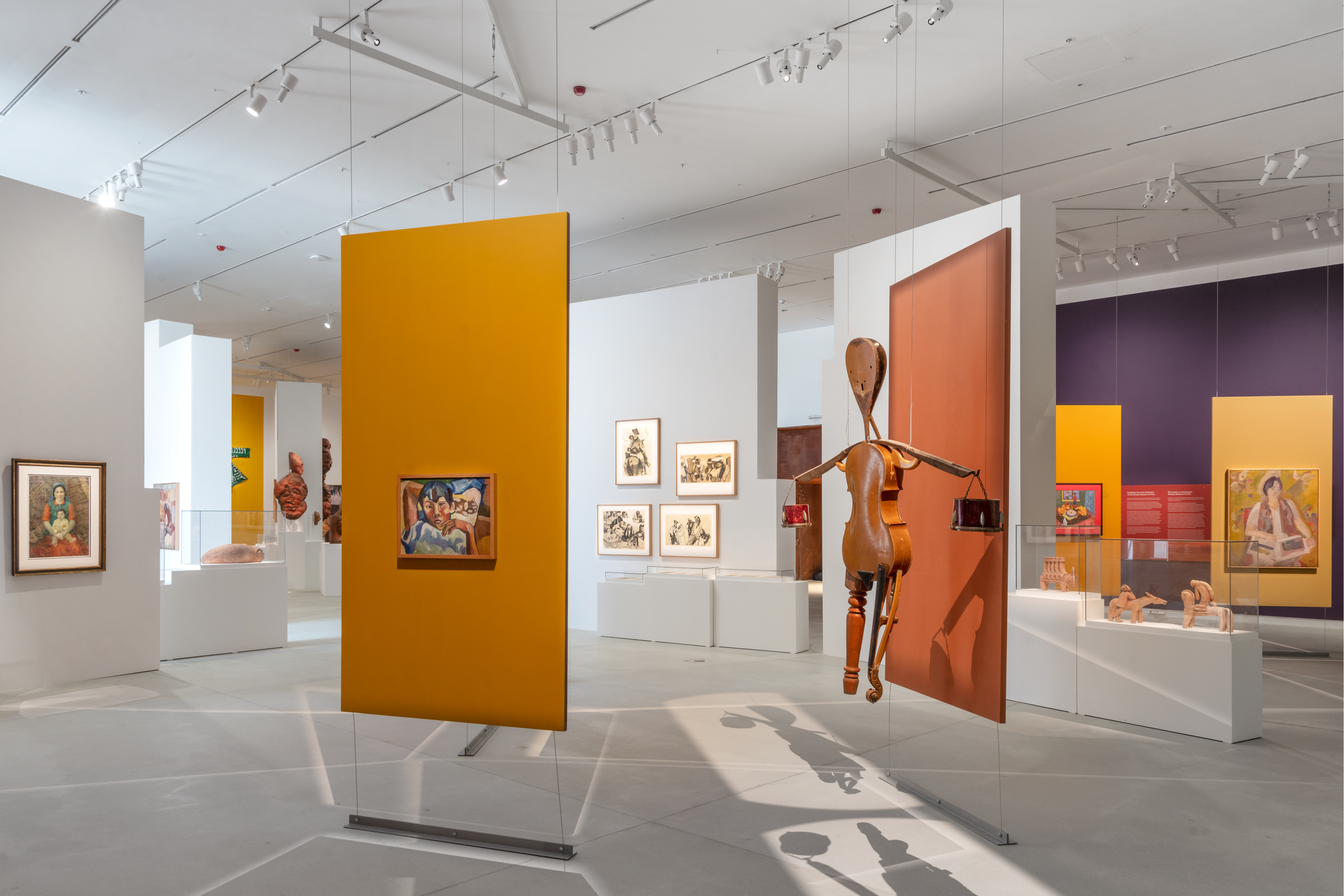
The permanent galleries bring together important works by both international and Kazakhstani artists, spanning painting, sculpture, installation, and mixed media. With diverse materials, scales, and forms inhabiting an open, layered spatial layout, the galleries demand a lighting solution that is both adaptable and precise. Following the design intent, the WAC ARCHITECTURAL team first identified the most appropriate standard product families, then implemented targeted customizations for specific applications.
MERE track luminaires provide precise spot illumination on paintings. Interchangeable lenses ranging from 15° to 50° allow beam angles to be tailored to different artwork sizes and formats, while CRI 97 light sources ensure faithful rendering of pigment and surface detail. Customized GOBOS supplement the system with clean, directional framing light for sculptures and suspended pieces. Their beams are uniform and crisp, with sharp, blue-free edges that clarify the light–shadow relationship around three-dimensional forms without spilling into adjacent zones.
Overhead, the W Track System, configured with X/T connectors, supports flexible routing and reconfiguration of luminaires as exhibitions evolve. Integrated DALI-2 controls enable both zoned and single-fixture dimming. The result is a balanced environment in which color, material, and volume each have room to breathe. As visitors move through the galleries, artworks maintain clarity and presence, gently elevated by light.
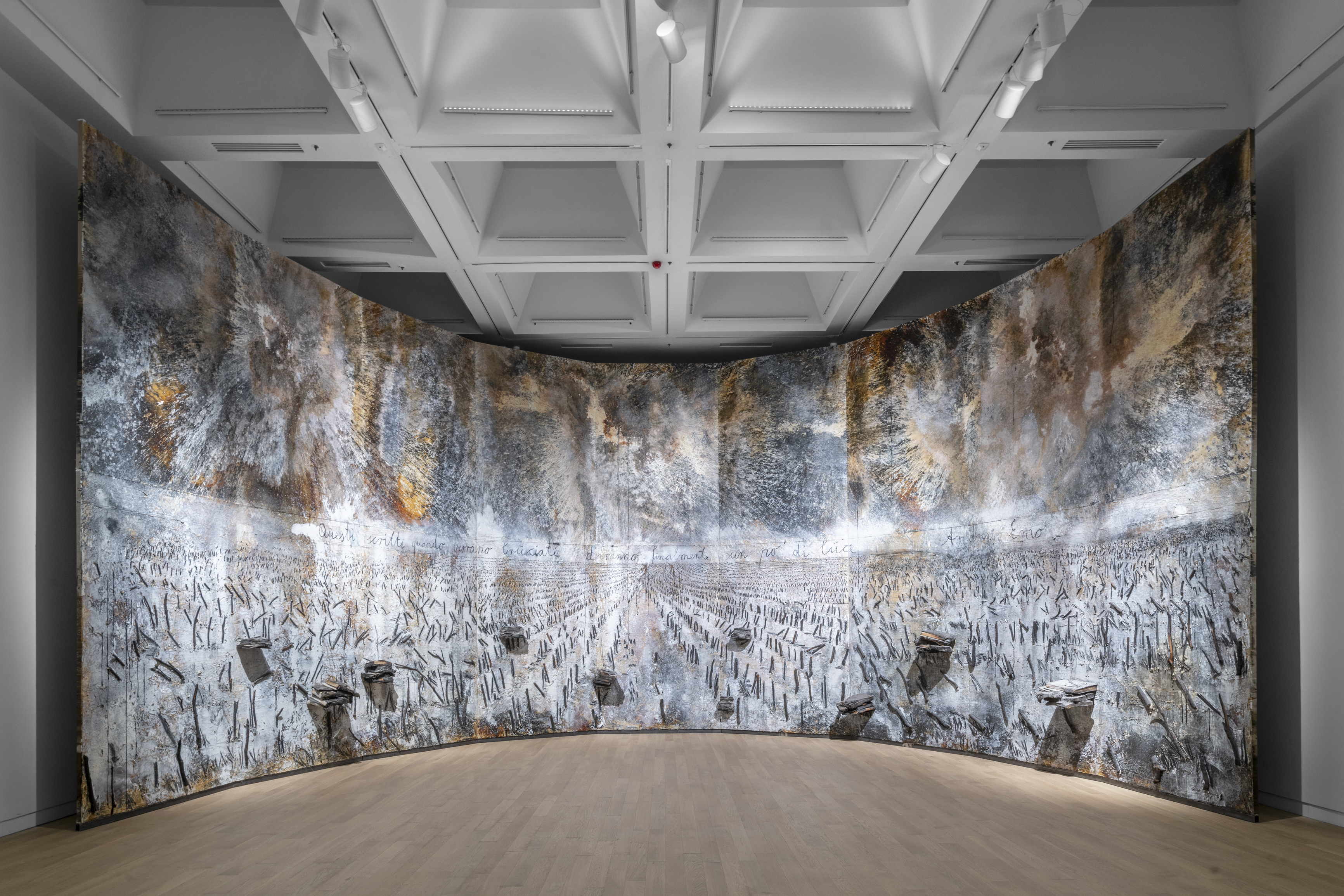
Anselm Kiefer — Jerusalem (2010)
Occupying an entire wall, German artist Anselm Kiefer’s monumental work Jerusalem (2010) uses heavy materiality and symbolic language to explore history and civilization. Composed of lead, straw, and lime-based pigments, its layered surface evokes a ruin buried beneath ash and time. This material density makes the work extremely sensitive to lighting: it must be clearly visible without losing its sense of weight. A multi-layered lighting approach was therefore adopted.
The grid ceiling integrates BEACON X5 linear luminaires, whose lengths were custom-matched to the ceiling module. These provide soft, diffuse ambient illumination, establishing a comfortable base level that allows visitors’ eyes to adjust naturally as they enter the gallery.
In addition, MERE luminaires deliver carefully calibrated grazing light across the surface, emphasizing the stratified textures of lead and ash. One layer of light remains calm and atmospheric; the other is directional and textural. Together, they balance overall illuminance with detailed articulation, allowing the work to reveal a sense of accumulated time as the viewer’s perspective shifts.
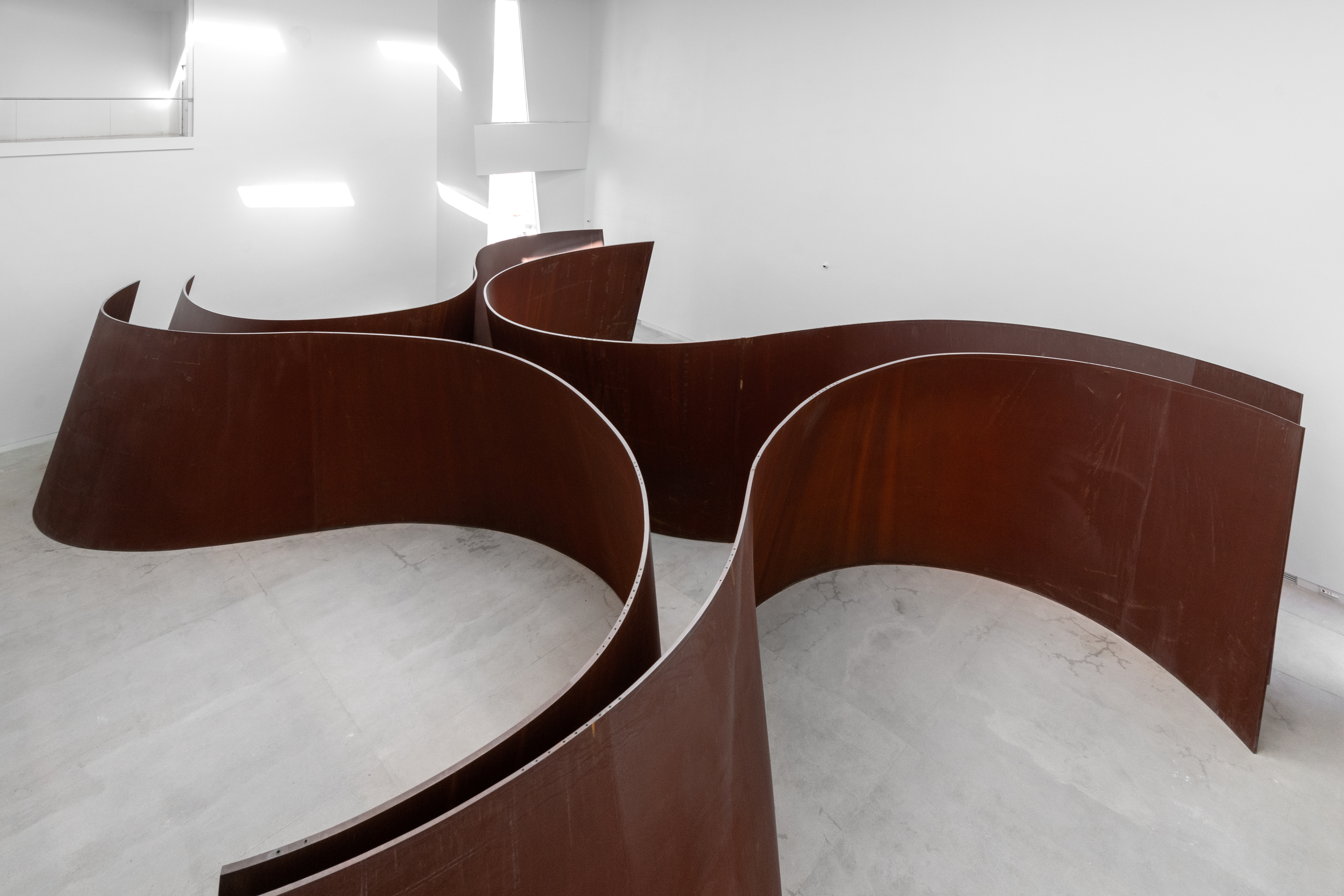
Richard Serra — Junction (2011)
American artist Richard Serra’s sculpture Junction (2011) is composed of towering, curved plates of oxidized steel that form a monumental spatial corridor. Its continuous arcs subtly divide the gallery and guide visitors through a slow, processional movement. The heavy, matte, light-absorbing surfaces impose strict demands on illumination: excessive brightness produces harsh reflections, while insufficient light erases the sculpture’s mass and orientation.
To address these challenges, WAC ARCHITECTURAL deployed FALCON Large high-output units at the top of the gallery. Capable of maintaining strong illuminance from heights exceeding 10 meters, the series meets the gallery’s 12-meter mounting requirements. Light from FALCON Large passes between substantial skylight bays, merging with natural light and gliding across the curved steel surfaces. This application creates subtle gradients of light and shadow, amplifying the sculpture’s volume and spatial rhythm.
As visitors move through the curved passages, layers of light shift with their viewpoint, allowing the weight and energy of the work to be fully perceived. In this gallery, light becomes an integral part of Serra’s architecture—not merely illuminating the sculpture, but making its mass, curvature, and flow feel distinctive in space.
Exterior Lighting
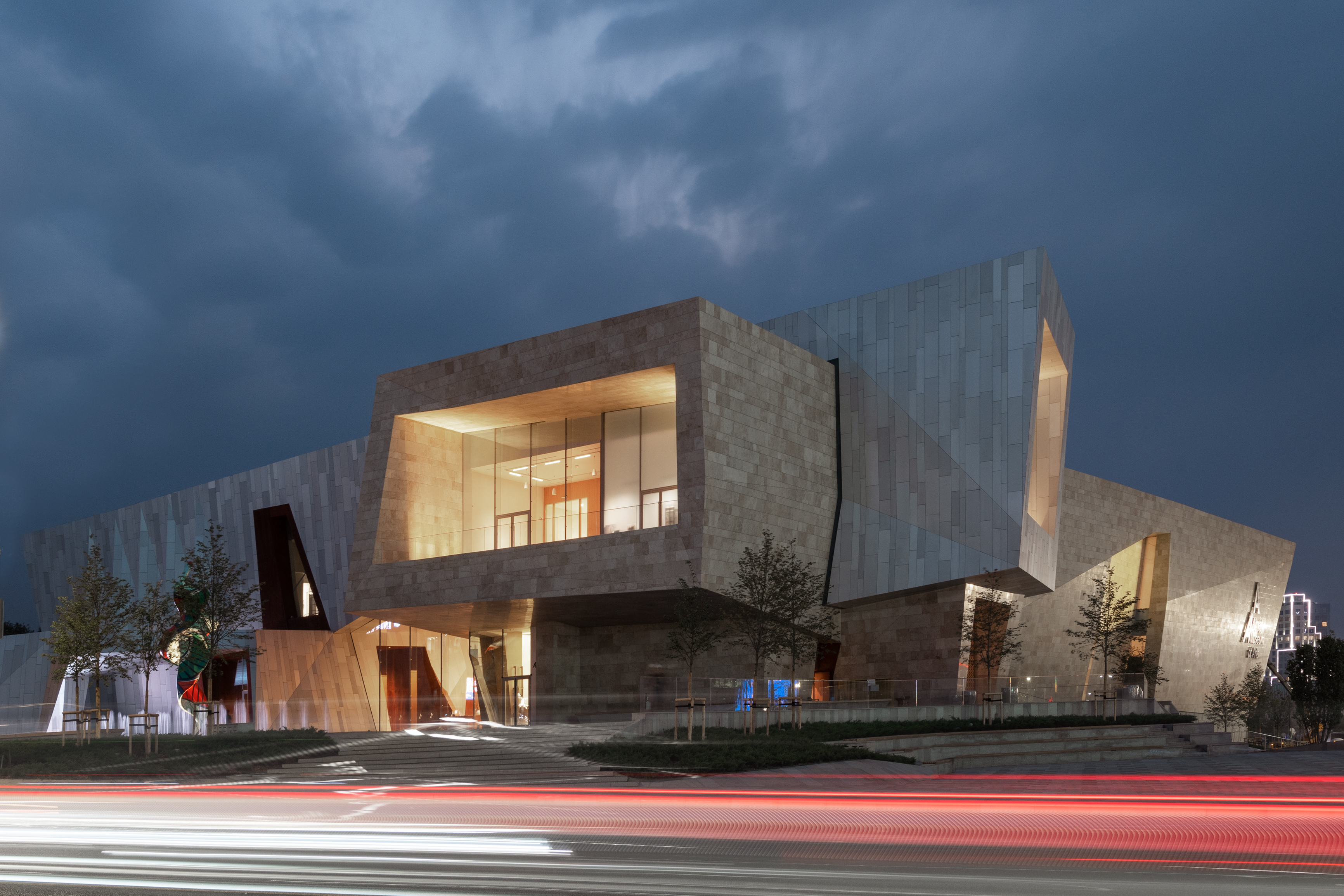
Almaty’s winters are long and severe, with temperatures dropping to –4°F, and snow-covered surfaces reflecting light strongly. To meet this challenge, WAC ARCHITECTURAL employed the FUEGO Compact series, whose IP68 rating ensures reliable performance in snow, freezing temperatures, and moisture.
The FUEGO Compact series allows superior on-site adjustment to aim the fixture head directly, without compromising the integrity of the enclosures, enabling precise tuning of beam direction while maintaining complete protection and high performance.
At night, the museum’s façades present a rich interplay of light and shadow. Light moves along the limestone and metal volumes, delineating their geometry and revealing layered depth. The building stands as a quiet, dignified landmark in the city’s winter night, like a silhouette of the Tien Shan Mountains rendered in light.
 EN
EN CN
CN NA
NA


 Menu
Menu